A Discussion With Fabian Ardila About College Recruiting
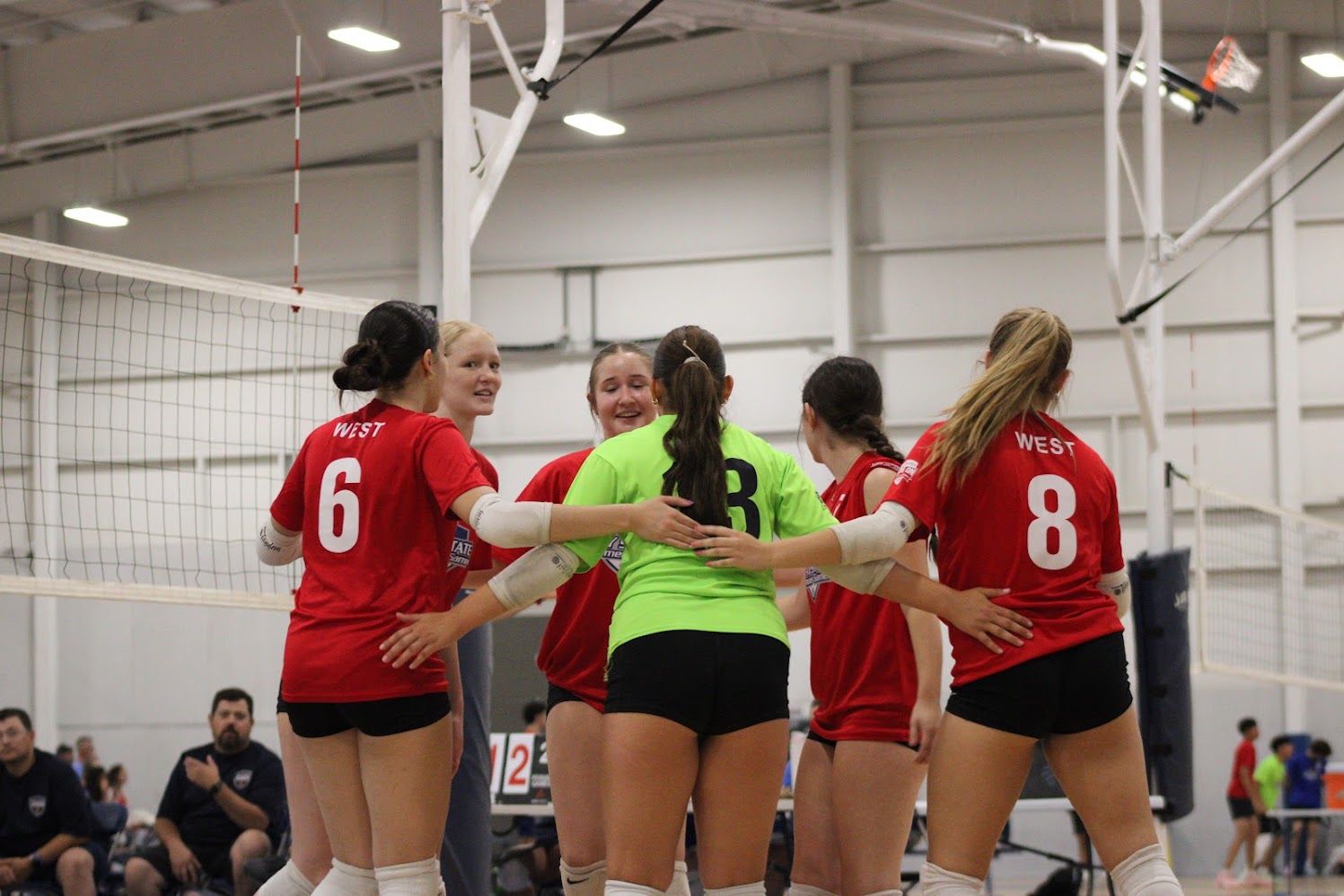
Fabian Ardila is the Bay State Games Southeast Girls Volleyball Head Coach, Owner of MGA Volleyball, and an Assistant Coach of the Women's Volleyball team at Babson College. Fabian has many years coaching at the high school, club, and college level and sat down with the Bay State Games Ambassadors to discuss the college recruiting process.
Understand all the things that come into play when they're looking at playing in college, how early should they start looking at getting recruited or being seen? And it's a tough thing. If you go to the rest of the United States, they'll tell you in middle school. And although the NCAA does not allow college coaches to recruit middle school players anymore, that used to be a thing for many years. The middle school kids are already starting that process.
For the Northeast, where we're at right now, most kids start that process sophomore, junior year. And I believe that's late. They should start when they are freshman in high school to at least get their name out there and start getting coaches to see them. Even though coaches are not going to be talking to them nor are they going to be making any decisions that early on because they can't. They can't do it until their junior year. But the bottom line is we want kids to start the process of understanding how to communicate with coaches, how to get their names out there, how to create videos and highlights so that they can be seen. That's on one side.
On the other side, there are three divisions in the NCAA. There are junior colleges, there's different places or levels where kids can play volleyball in college. And so, the first conversation is always about division.
Do you see yourself playing in a Division I school, division II or Division III?
And as far as I'm concerned, it comes down to what is your level and what is your personality? I have three daughters. All of them played in college. I haven't paid 1 dime for college because they all received athletic scholarships and played all four years in college. They've all graduated, but the difference in personality is what drove them to play in the school they played in.
My oldest daughter wound up going Division I in her first year, and that was not something I wanted her to do because her personality was not a Division I personality. She wanted a social life. She wanted to go to parties; she wanted to go do extra activities or other things. On the Division I side, you basically play volleyball, and you hang out with the volleyball players, and they become your family, your friends, the people you do stuff with. But there really isn't time for you to go do other things. If that's for you, it's going to be a great time because you will enjoy it. But if you want to do other things, Division I is not for you.
My middle went to Northeastern, and she loved every minute of it, but they restricted everything she did. She had a schedule from when she woke up to when she went to sleep. They told her when to eat, they told her when to study, they told her when to lift, and they told her when to practice. Everything was very, very specific. So when you play Division I, that's the type of personality you need to have.
So getting back to my oldest child wound up going to Stonehill, which was a division II school. They just became Division I, but at the time they were Division II. And that was right for her personality because it combined even amounts of academics. Of the team while still participating in high level practices and good competition. So you have to kind of look at it that way.
Division III is a little bit different than or the opposite of Division I, where academics dictates when you practice, how often you practice and where you play can be very high level. But the difference is academics first, so you kind of have to look at your personality to see where you fit first.
The second thing that I would recommend is to locate geographically where do you want to be? And mind you, we haven't even talked about the type of school yet. But the bottom line is, are you OK with being on the East Coast, on the West Coast? Do you want to be in the South? Do you want warm weather? Are you OK with being in the Northeast? Those are things that are very important because based on the location of where you want to be, then you start looking at how many schools within a certain radius. So I normally say if you're looking to study somewhere in Virginia, I would look at every state that surrounds Virginia and all the schools in that area that are the division you're interested in and make that list.
And then start figuring out, do they have the things academically? You might be interested in talking about academics when you look at a school. And maybe you're too young to decide as a 9th grader that you're going to be a doctor. Maybe you don't like math. Maybe you're interested in the arts or writing. It's better for you to know what you don't like than what you do want to be. Because if you know you don't like math, you're not going to go play at MIT. So, you kind of need to figure out where you want to be in terms of academics.
Then after you've looked at geographical location, the division, the type of school, I want you to look at the setting. Do you want to be in a city Northeastern? OK, maybe you don't like it. Maybe you want something traditional that has a quad, that has a cathedral that has all the Ivy and stuff that are a traditional school of what we know it to be. For a university like Boston College, that's a traditional school. Are you interested in that type of setting? And then the last one would be near any towns, for example, Penn State. They are their own town. There is no town around them. There is nothing else. Lehigh, another one that has nothing around them. It's just the school, so if those environments are something you're OK with, then those are the schools you need to kind of consider.
And then lastly, how large of a school do you want to go to? I went to the University of Pittsburgh. I received an academic scholarship and then I walked on to the volleyball team. My school was very large. I would walk 2 blocks and not know anyone within those two blocks. That's what a Division One large school is all about. Division I, medium sized school, Boston College, you'll walk two blocks. You'll know maybe two or three people because the school isn't huge. Most division two schools are kind of that same size where you're going to know two or three people as you walk a couple of blocks. A Division III school, you know the majority of people you're walking around with. And so it depends on what you're looking to do and the difference between a large school, a medium size and a small school.
Not only is it about who you know, but it's about what the school can offer you. So if let's say you're looking at a semester abroad, semester abroad on a large scale, school may have 10 options, A medium school may have 3. A Division III, school may only have one or two. So again, like you have options based on the sizes of the school.
Once you've done basically this analysis of yourself of narrowing down all of these things, then you start looking at the schools academically to see if you like the programs that they offer and the classes that they offer. Once you've narrowed that down, then start looking athletically at the school and does it have a program that meets your needs, meets your level and that you have watched them play.
You know something about the coach and start that process of emailing the coach, inviting them to come play, to watch you play and see if there's a connection and, or if there's a need for your year of graduation for that particular school.
And basically that's the process in a nutshell.
I ask every kid to come up with 30 universities, colleges that they're interested in academically. And then we look at the volleyball program and if the volleyball program fits who they are and if that works, we narrow it down to about 10 schools and we start emailing those coaches. The player does and then they start that communication process of getting them to come and watch them play at tournaments.
The other thing that I ask all players to do is to go to a website called University Athletes. University Athletes is a software that has both an online component as well as an app. Every single college coach has that app on their phone because every tournament that exists in the United States is on that app. So when I go to a tournament, I open up the app, there's the tournament. It tells me every single person that has either emailed me is interested in Babson or I'm interested in them. And it gives me their schedule. It tells me what court they're on and what time they're going to be there for me to be able to go and watch them play. So get on a recruiting site that's free.
It's very easy for you to just go to the college website, find the name of the head coach, find their e-mail address, it's normally there and send them information. So get on a recruiting site and let's make sure that that recruiting site offers a free page.
The only one thing I'm going to say is do not give up because coaches are not good at corresponding back with you, communicating with you and keeping you up to date. That's something you have to do. You have to be relentless and you have to keep at it. Even if it's like a full year of you communicating with coaches and you haven't heard back, you got to keep it up because at some point in time a coach will be like, I need this person, and now all of a sudden you're lost and you're gone. You want to be top of mind no matter what.
Question 1: Is it a good idea to invite college coaches to one of your high school games?
FA: Yeah, invite them. The only problem is we have a very small budget for us to go and watch kids at their high school. I want to say the vast majority of college coaches go to large format tournaments because that's where they're going to see the most kids in one setting. I only know of one or two coaches locally. Like for example, the head coach at BC may go to 1 high school to watch one kid play, but that's because it's a local kid who's interested and he's interested in them. I know of the Northeastern coach who did that once three years ago as well. It is extremely hard for a college coach from California to fly all the way out here to go and watch a kid play in a in one high school match because they're only going to come and watch one kid. The budget doesn't allow for it, so they tend to go to large festival will be happening in the next two weekends. You're going to find a lot of college coaches to go to that tournament because there's 5000 players there. It's easy to watch more players, so you could invite them, but the likelihood that a coach is going to go to a high school to watch one player, it's kind of tough money wise.
Questions 2: If you had to pick one piece of advice about how to e-mail a college coach, what type of information should they include or highlight with that?
FA: The first thing you should say is I am interested in your school academically because you offer X, Y or Z. Then talk about the volleyball program because obviously you're going to college to get an education. It just so happens that you're going to play volleyball as well, but they want to know that you're interested in their school 1st and obviously see their program as well. But you got to talk a little bit about the school so that they know that you're not just fishing to get onto a volleyball team.
Question 3: What can I do to stand out when people come visit campus?
FA: You know what, when you're having an athlete come visit campus, what do you think are the things that stand out compared to you know, the athletes that are just coming through, having a meeting and then going home normally? Why are you here? Are you here because there's an opportunity for you to play volleyball? Are you here because the school is attractive academically or are you making the rounds to see what is the best offer you're going to get? Now, this is tougher for kids in Division I and division two than it is for Division III. And the reason is in Division III there is no athletic money.
So if you're coming to visit me at Babson, it's because you're interested in Babson and volleyball is something that you do. We obviously because of being in the top 20 yearly, we have very high level volleyball players coming to us, but they've got to get in first. That the school is really tough. It's also very expensive. So it's kind of a tough thing for kids to just come and visit. They have to really be interested in the school. But Division I and Division II, as we know, money is a factor. And so a lot of kids come in because they're looking for a scholarship first and at the Division One level, they're looking to play. So the question really becomes be honest. What are you doing here? Why are you here? Why do you like our school? And when you're talking, it's very easy to see if you're telling the truth or not. So be honest of why it is that you're interested in that particular school?